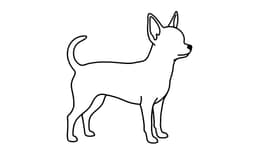
Chihuahua
Toy · ~2.5kg
- Neck default
- 24cm
- Chest default
- 36cm
- Back default
- 26cm
- Waist default
- 30cm
Generate a free dog sweater crochet pattern personalized to your dog in about 60 seconds, or browse our hand-picked roundup of 8 free patterns from trusted crochet sites — including options for free crochet dog sweater patterns for beginners.
Five dog breeds with sensible defaults · four chart motifs · custom neck / chest / back / waist sizing · instant PDF download · no email signup · works on phone and desktop.
The 5 fastest ways to start a free dog sweater:
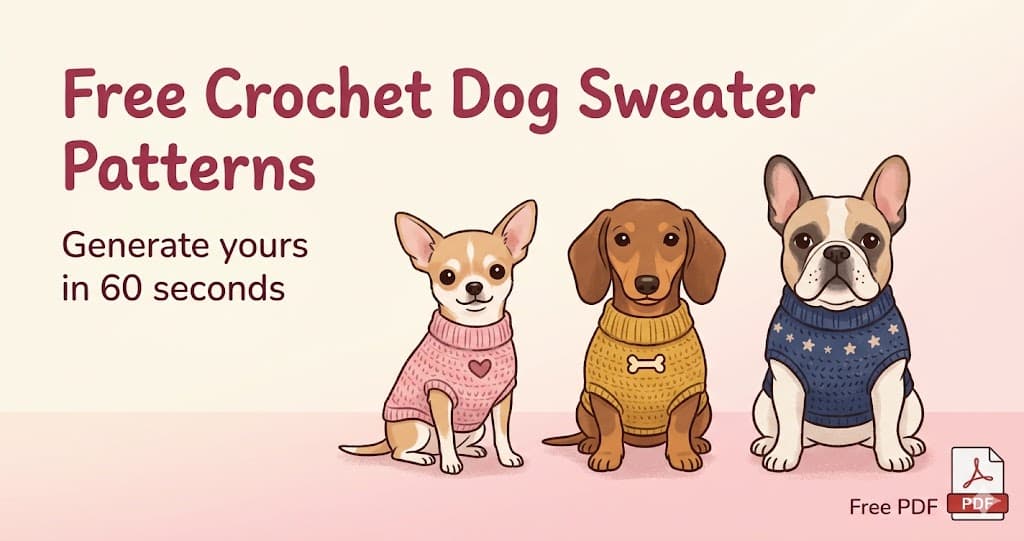
Skip the 30-tab listicle dive. The fastest way to find a free crochet dog sweater pattern for your specific dog is to skip the browsing entirely — pick your breed below, the tool loads sensible default measurements for that body type, and you can fine-tune the neck, chest, back, and waist before clicking download. Your PDF is generated on the spot and includes everything you need — materials list, gauge, an eleven-page pattern with a clear chart, and a license that lets you sell finished sweaters at craft fairs.
Toy · 2.5kg
Generate pattern →
Small · 3.5kg
Generate pattern →
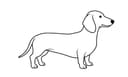
Small (long back) · 4.5kg
Generate pattern →
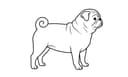
Medium · 9kg
Generate pattern →
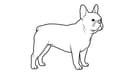
Medium · 11kg
Generate pattern →
All five breed pages load the same generator with breed-specific defaults — pick any to start; you can change the breed and dimensions from inside the tool.
The other top results for "free crochet dog sweater patterns" are listicles that link out to 25 or 30 separate pattern pages on Ravelry, Yarnspirations, and indie blogs. They are useful if you enjoy browsing, but most crocheters who land there bounce between four or five tabs before realizing the patterns are written in fixed sizes that don't quite match their dog. Then comes the math — scaling stitch counts up or down, recalculating increase rounds, redrawing the colorwork chart to fit the new back panel width.
Our generator does that math for you. You enter your dog's actual neck, chest, back, and waist in centimeters and the algorithm chooses the right stitch counts, places the colorwork chart over the correct number of back-panel stitches, and writes out every round with the real row numbers. The PDF you download is a custom pattern, not a template you have to adapt.
Take the comparison in one line: Browse 30 templates, pick one, adapt the math — or generate one sized to your dog in 60 seconds.
Try the generator with a Chihuahua default →The flow is intentionally short. There is no email signup, no account, no waiting on a confirmation email with a download link. Everything runs in your browser and the PDF is built on your device.
Five defaults cover the most common small to medium body types — a long-bodied Miniature Dachshund needs different proportions than a compact Pug, and the generator encodes those differences. If your dog isn't on the list, pick whichever breed matches their body shape closest and override the measurements in step 2.
Adjust neck, chest, back, and waist in centimeters. Pick a main color and contrast color from 27 worsted-weight yarn options. Choose your back-panel motif — bone, heart, star, paw, or your dog's name spelled out in 3×5 pixel font (up to three or four letters depending on chart size). Upload a custom image as a colorwork chart if you prefer.
The PDF is generated locally and saved with a filename that includes your breed and motif. It contains a cover page with breed illustration and final measurements, materials and gauge, abbreviations, the pattern split into seven sections (neck ribbing, body shaping, belly setup, colorwork, bridge, waist shaping, finishing ribbing), the full chart with absolute row numbers, an FAQ, and license terms.
Curious which breed default to pick? Start with Chihuahua if your dog is under 5kg, Pug for stocky 8–10kg breeds, or Mini Dachshund if your dog has a long back relative to height.
Each breed page loads breed-specific default measurements, a starting color palette tuned to common dog coat colors, and the same interactive generator. Click into any to start; you can change the breed mid-session from inside the tool.
Toy · ~2.5kg
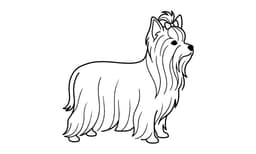
Small · ~3.5kg
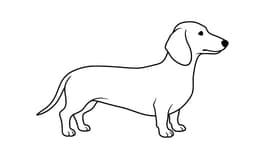
Small (long back) · ~4.5kg
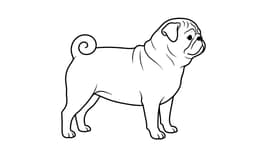
Medium · ~9kg
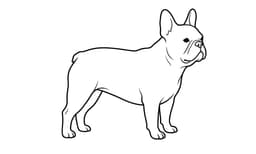
Medium · ~11kg
Don't see your breed? Pick the closest body type and override the four measurements inside the tool. The algorithm recalculates everything from your custom numbers, not the breed name.
All five default breeds are small dogs — if that's your one piece crochet dog sweater pattern free target, you're in the right place. See our dedicated small-dog patterns page → for tips on tiny-dog proportions and sizing.
Every output here is a true one piece crochet dog sweater pattern — all five breed patterns use a belly-band, top-down construction. You start at the neck opening and work the entire sweater as one continuous tube, with the back-panel colorwork built in as you go. No seaming, no separate panels to line up, no risk of an ill-fitting shoulder seam.
The other major advantage is sizing flexibility. Because the tube is shaped with increase and decrease rounds you can pause and try the sweater on your dog at any point — if the chest is tight, add an extra increase round; if the waist is loose, taper sooner. Multi-panel constructions force the math to be perfect before you sew, which is brutal for first-time crochet clothing makers.
The trade-off is that one-piece designs need more attention to the colorwork chart row numbering. Each row of the chart corresponds to a specific pattern row (we mark them as R18 through R33 in the PDF, not as "chart row 1"), so you always know exactly where you are if you put the project down for a week.
Two PASF-popular variants: "one-piece crochet dog sweater pattern PDF free" and "one-piece crochet dog sweater pattern free" — both describe what we generate by default. No seaming, no separately-knit yoke.
Try the one-piece pattern on Yorkshire Terrier →If you prefer to follow a fixed-size template from an established crochet blog, or you're looking for a free simple crochet dog sweater pattern that doesn't need any tool, here are the eight we recommend most often. Each links directly to the original pattern page — none of these are affiliate links, just genuinely good resources for the crochet community.
Sizes: XS · S · M
Worked top-down from the neck in one piece with no sewing. Beginner-friendly with a written-only pattern.
Sizes: XS · S · M · L
Classic worsted-weight design from Red Heart's free library. Includes a PDF you can print at home.
Sizes: XXS through XXL
Photo tutorial plus written pattern in nine sizes — works for chihuahuas all the way up to large breeds.
Sizes: Varies
Brand-owned collection of free downloadable PDFs covering sweaters, bandanas, and bed accessories.
Sizes: XS · S · M · L · XL
Cable-front detail in sizes XS to XL with notes for fitting non-standard dog shapes.
Sizes: Roundup
Curated roundup of 27 free patterns across styles — turtleneck, hoodie, button-up, strap-under.
Sizes: Roundup
Cozy-leaning roundup with size and skill-level filters; good for finding chunky-yarn designs.
Sizes: Roundup
Largest free roundup with table of contents covering 30 patterns including a poncho alternative.
The four numbers you need are neck, chest, back length, and waist. Use a soft sewing tape (the flexible cloth kind, not a metal carpenter's tape) and have your dog stand on a flat surface, relaxed but not slouched. Most dogs tolerate this if you take 30 seconds total and don't pull the tape tight.
The tape should feel snug but you should be able to slip one finger under it with mild resistance. If you're looking for your first crochet dog sweater for beginners, this measuring step is the most important — every downstream stitch count depends on it. Too tight and the finished sweater will pull when the dog moves; too loose and it will sag or slip around. If your dog is between two measurements (say, 36cm and 37cm at the chest), round up — the ribbing in the pattern absorbs the difference and looser is always more comfortable than tighter.
Once you have the four numbers, plug them straight into the tool — the algorithm doesn't care if they match a standard size chart.
Measured? Generate the pattern →The whole project costs roughly 12–18 USD in materials if you're starting from scratch, and most of that is the yarn. Worsted weight (Craft Yarn Council weight class #4) is the right choice for the pattern's gauge — heavier yarn produces a stiffer fabric the dog won't want to wear, lighter yarn produces a flimsy sweater that won't hold shape.
Plan on 8–12 hours of active crochet time for an intermediate maker. A chihuahua-sized sweater goes faster (6–8 hours), a french bulldog-sized one slower (12–15). The colorwork section is the slowest part because you're alternating between two yarns every few stitches; if you've never done two-color crochet before, watch a short YouTube tutorial on tapestry crochet before starting that section.
The official Craft Yarn Council weight standards page is the canonical source for what counts as "worsted #4" — handy if you're shopping outside the major brands.
Take four measurements with a soft tape while your dog stands relaxed: neck circumference at the collar position, chest at the widest point behind the front legs, back length from neck base to tail base, and waist circumference just in front of the back legs. Keep the tape snug but not tight — you should be able to slide one finger underneath. If any measurement is between two sizes, round up.
Worsted weight (Craft Yarn Council #4) is the standard. It produces a fabric warm enough for cool weather, sturdy enough to survive dog wear, and works at our recommended 5mm (US H/8) hook for a tight stitch that resists snagging. Bulky (#5) yarn works for thicker winter sweaters but consumes more yarn and feels heavier on the dog.
About 8 to 12 hours of active work for an intermediate crocheter — call it 10 hours as a planning baseline. Small breeds like chihuahuas finish faster, around 6 to 8 hours. Larger breeds with a chest over 50cm can take 12 to 15 hours. Splitting the work across three or four evenings is typical.
Yes — the entire point of our generator is custom sizing. After picking your breed, edit the neck, chest, back, and waist measurements directly. The pattern algorithm recalculates stitch counts, increase/decrease rounds, and the colorwork chart placement in real time. The downloaded PDF reflects your exact numbers, not a generic S/M/L template.
Yes for small-batch handmade sales at craft fairs, on Etsy, or via Instagram — that's your work and your profit. You may not resell or redistribute the PDF pattern itself, claim authorship of the pattern, or use it in machine-generated AI training datasets. The full license text is on each downloaded PDF and at our Terms page.
If you've searched Ravelry free crochet dog sweater patterns, you've seen the trade-off: their patterns are static templates in fixed sizes; you adjust by changing yarn weight or hook size and hoping it fits. Our generator outputs a pattern computed to your dog's actual measurements, so the back panel width, neck ribbing, and waist taper are right the first time. No Ravelry account, no email signup, no waiting on a PDF download link — generate and print in under a minute.
Pick the breed closest to your dog's body type. You can still adjust every measurement once the tool is open — the breed is just a starting point.